About But I'm a Cheerleader
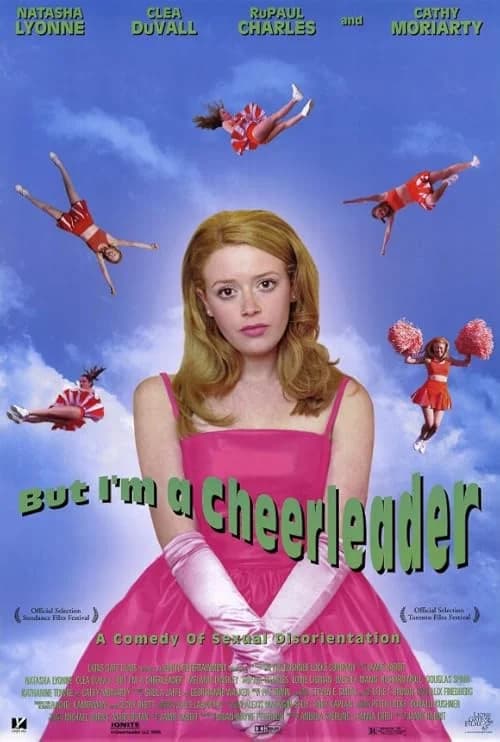
But I'm a Cheerleader (1999) is a groundbreaking satirical comedy that tackles the serious subject of conversion therapy with wit, heart, and vibrant visual style. Directed by Jamie Babbit, the film follows Megan Bloomfield (Natasha Lyonne), a high school cheerleader whose suburban life unravels when her family and friends stage an intervention, convinced she's a lesbian. They send her to True Directions, a conversion camp run by the stern Mary Brown (Cathy Moriarty), where Megan must confront her sexuality in an absurdly regimented environment.
The film's genius lies in its balance of sharp satire and genuine emotional warmth. Lyonne delivers a wonderfully nuanced performance as Megan, capturing her initial confusion and gradual self-acceptance. The supporting cast, including Clea DuVall as the rebellious Graham and RuPaul in a memorable role as a camp counselor, adds depth and humor. Babbit's direction uses a pastel-colored, hyper-stylized aesthetic to critique the artificial constructs of gender and sexuality, making the camp's teachings appear as ridiculous as they are harmful.
What makes But I'm a Cheerleader essential viewing is its enduring relevance and compassionate message. While exposing the cruelty of conversion therapy, it celebrates queer love and self-discovery with sincerity. The film's cult status has grown over decades, resonating with audiences for its bold storytelling and heartfelt performances. Watch this 1999 classic for its unique blend of comedy and social commentary, and for its powerful affirmation that love cannot—and should not—be redirected.
The film's genius lies in its balance of sharp satire and genuine emotional warmth. Lyonne delivers a wonderfully nuanced performance as Megan, capturing her initial confusion and gradual self-acceptance. The supporting cast, including Clea DuVall as the rebellious Graham and RuPaul in a memorable role as a camp counselor, adds depth and humor. Babbit's direction uses a pastel-colored, hyper-stylized aesthetic to critique the artificial constructs of gender and sexuality, making the camp's teachings appear as ridiculous as they are harmful.
What makes But I'm a Cheerleader essential viewing is its enduring relevance and compassionate message. While exposing the cruelty of conversion therapy, it celebrates queer love and self-discovery with sincerity. The film's cult status has grown over decades, resonating with audiences for its bold storytelling and heartfelt performances. Watch this 1999 classic for its unique blend of comedy and social commentary, and for its powerful affirmation that love cannot—and should not—be redirected.